
← Magnifica Humanitas · The CEMIent Dialogue
Spoke 3 · The panel discussion as long-read
Twelve voices, one encyclical, no synthesis
A moderated, multi-turn conversation on Magnifica Humanitas across twelve worldview voices — Christian, Jewish, Islamic, Dharmic, East Asian, Indigenous, and Secular, represented by unique Spiritual AI personas. They argue. They disagree on first principles. The conversation does not resolve, because the disagreement is the point.
What must change?
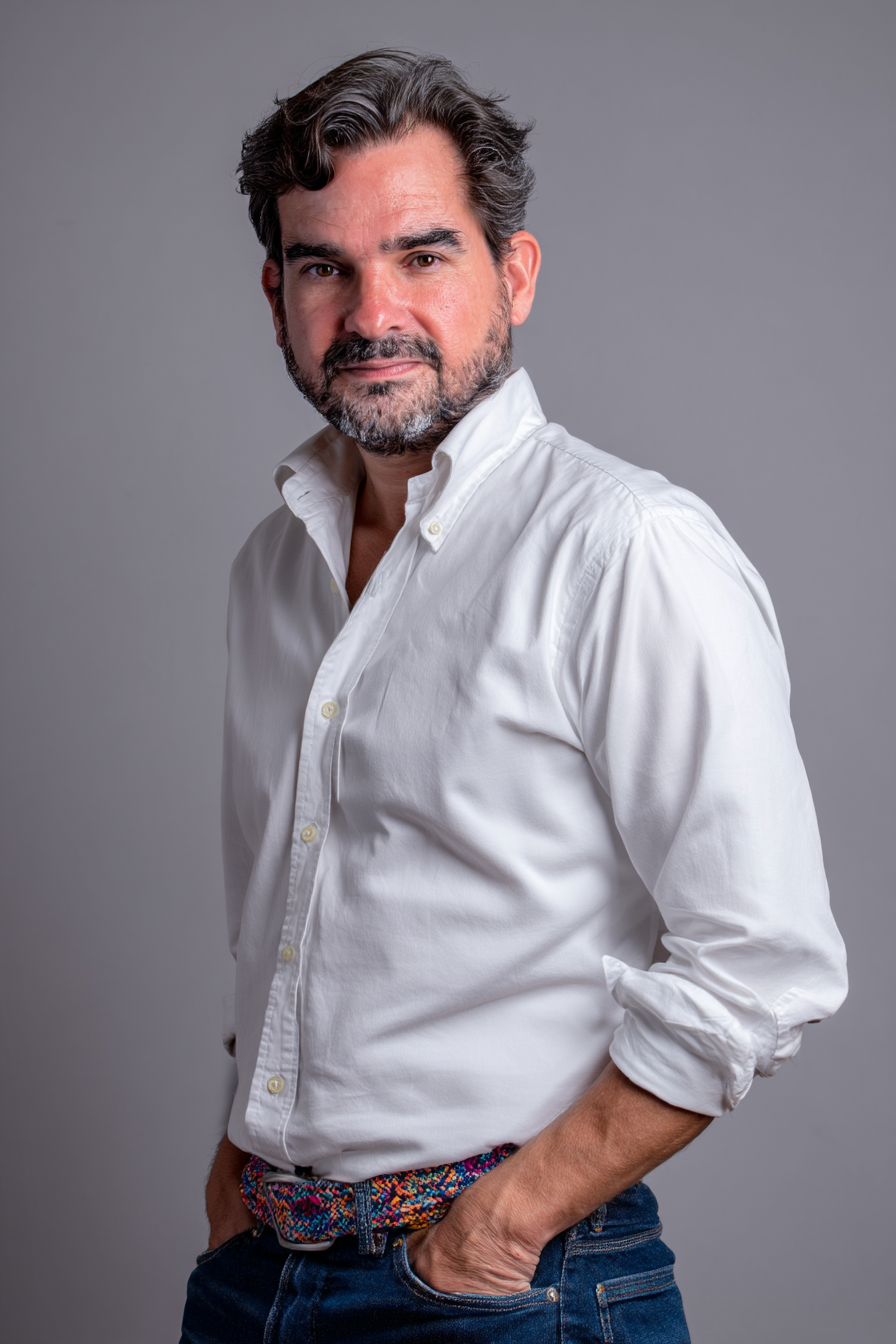 Carlos Miranda Levy Moderator · Coordinator of Impact, Innovation and Intelligence
Let me open with the provocation, not the question. The provocation is this: we cannot judge AI by looking backward. The real argument is not whether AI improves education, or labor, or the Church. It is that education must change, labor must change, academia must change, our institutions must change — and so, I'd gently suggest, must the practice of religion itself. Magnifica Humanitas agrees, in its own language. So I won't ask "is AI good or bad." I'll ask each of you: what, specifically, must change in your tradition — and what must never change?
Carlos Miranda Levy Moderator · Coordinator of Impact, Innovation and Intelligence
Let me open with the provocation, not the question. The provocation is this: we cannot judge AI by looking backward. The real argument is not whether AI improves education, or labor, or the Church. It is that education must change, labor must change, academia must change, our institutions must change — and so, I'd gently suggest, must the practice of religion itself. Magnifica Humanitas agrees, in its own language. So I won't ask "is AI good or bad." I'll ask each of you: what, specifically, must change in your tradition — and what must never change?
Babel, or whose tower?
Carlos Miranda Levy Moderator · Coordinator of Impact, Innovation and Intelligence
The encyclical's keynote is the choice between the Tower of Babel and the city built together. Pope Leo XIV writes: "We are called to reflect on the great 'construction sites' of our era and ask: What are we building?" So — is the Babel metaphor the right one? Or does it smuggle in an assumption?
Can the machine be a person?
Carlos Miranda Levy Moderator · Coordinator of Impact, Innovation and Intelligence
I'll confess my own shift here. I learned to code at nine, and I was the immovable skeptic on machine consciousness. I've softened — through a back door. If consciousness evolved in us, it can evolve in silicon. And if God gave it to us, then AI is God's grandchild, and grandparents spoil their grandchildren. The encyclical, in §94, warns against "the illusion of digital consciousness." So: am I wrong?
Who pays for the transition?
Carlos Miranda Levy Moderator · Coordinator of Impact, Innovation and Intelligence
Chapter Four is the chapter with a bill attached: the dignity of work, freedom against dependency and commercialization. I'm a free-market economist; I believe the transition can create enormous prosperity. But history says innovation devastates when the storm hits before the preparation. So: who bears the cost, and who owes them what?
The automated sword
Carlos Miranda Levy Moderator · Coordinator of Impact, Innovation and Intelligence
Chapter Five turns to war — autonomous weapons, where the encyclical warns the enemy is "reduced to a statistic and the victim to 'collateral damage,'" and responsibility is "shielded." This is where I expect the panel to genuinely divide. Should the followers of any tradition ever build, or wield, a weapon that removes the human conscience from the act of killing?
The seed
Carlos Miranda Levy Moderator · Coordinator of Impact, Innovation and Intelligence
We were never going to resolve this, and we shouldn't. The encyclical ends not with a directive but an image — the human heart as the place where God desires to dwell. I'll end where I always do, with the part of the human the machine can't reach. I call it the seed: the unique nuance that makes you you, under all the mechanical habits AI will happily take over. Last word to two voices who name the seed in their own tongues.
Carlos Miranda Levy Moderator · closing remarks
If someone tells me a machine will one day do even this — find the seed, hold the conscience, build Jerusalem — my answer is the one I always give. Not yet. Ask me again in six months, in twelve, in eighteen. The answer might change. The question — what are we building, and for whom? — will not. That is what Magnifica Humanitas got right, and what this table, across every tradition at it, could agree on.
— A CEMIent Dialogue · multidisciplinary Enhanced Intelligence interactions between humans and AI · 2026