
Most of what we do — professionally and personally — is mechanical and replicable. Even greeting another person, kissing our children, courting a partner has its mechanical shell. There is, however, a unique seed in each of us: a particular set of branches, a particular set of nuances, a particular way of paying attention. That seed is what makes us us. And the only honest reading of Magnifica Humanitas — Pope Leo XIV's first encyclical, signed on the 135th anniversary of Rerum Novarum — is that this is the encyclical's central concern, even when it speaks in other vocabularies.
The Pope frames his opening choice as Tower of Babel or the city in which God and humanity dwell together. The dyad is theological; the question underneath it is anthropological. What is the human person, that machines should be mindful of them? Or, in the way I prefer to ask it: what part of being human is precisely not automatable, even in principle — and how do we keep cultivating it once we have the leisure to do so?
I learned to code at nine, on a Texas Instruments TI-99/4A. Forty-four years later, I am no longer the immovable skeptic on what software can and cannot do. The honest position, in 2026, is that AI will do most of what we do — and often do it better. The sooner we accept that and stop arguing about whether the machine can write the email, sing the song, draft the brief, run the meeting, the sooner we can turn our attention to the only part of the conversation that matters: what do we do with the freed capacity?
The encyclical's gift
The encyclical's gift is not its metaphor — Babel is old. The gift is the framing of the choice as perpetually present. We are not going to settle the AI question in 2026, or 2030, or 2050. We are going to make the choice again every morning, in millions of rooms — in every product decision, every team standup, every dataset choice, every minute of attention granted or withheld. Pope Leo XIV is preparing us for that condition, not for a one-time verdict.
And this is where I find the Pope's anthropology genuinely useful, not just devotionally. He insists, across five chapters, that the human person is not a function call. He builds the argument from the magisterium's foundational principles — dignity, common good, subsidiarity, solidarity, social justice, the universal destination of goods. The framing is Catholic; the conclusion travels: the human person is the unique seed that the mechanical habit cannot reproduce. The encyclical is the magisterium catching up — with great care and considerable theological investment — to a fact most of us who build with these tools have known operationally for a few years.
The "must change" argument
You cannot judge AI, transformation, or impact by looking backward. The honest argument is not whether AI improves education or labor or institutions. It is that education as we know it must change — long overdue, since the introduction of computers in the 80s and the Internet in the 90s. Labor must change. Academia must change. Corporate and institutional structures must change. The question is not whether AI fits. It is that what we do, how we do it, the very way we exist, perform, and interact must change. If we fail to do so, the misalignment will hurt us individually and globally.
Magnifica Humanitas does not say this in operational language; it says it in theological language. But the underlying call is the same: the Church will need to reshape its own pastoral practice, its own seminary formation, its own catechesis, its own outreach. The encyclical is not only a teaching to the world. It is, between its lines, a teaching to the Church itself.
History also tells us that innovation has often been the cause of devastation when multiple factors collided in perfect storms — the Dust Bowl from the mechanization of agriculture, air pollution from fuel combustion, the negative impact of tech-then-multimedia-then-internet on education when implemented hastily (which is more often than not the case; tech can be great for education, and rarely is), and social media on the mental health of an entire generation. The factors collide again now, around AI, with the additional acceleration that this storm reshapes cognition, not just labor. The encyclical's instinct — to prepare in advance, to mitigate the negative impacts, to facilitate a transition that lets societies enjoy the prosperity AI can bring — is exactly the policy posture the moment demands.
What CEMI is doing about it
The CEMI ecosystem rejects the AI conversation framed as replacement. Our operating question is not "What can AI do instead of me?" It is "What can I do with AI that I never could before?" The freed capacity — what AI gives us by doing the mechanical things faster and better — is meant to be redirected toward doing things better, doing more things, doing entirely new things that were previously impossible. Efficiency is the launchpad, not the destination. Those who understand this leapfrog those who don't.
Difference is the competitive edge. AI's training data is biased and limited — it does not fully understand local markets, particular cultures, specific realities, specific rhythms. Rather than a limitation, that is an opportunity. Those who apply AI within their own cultural context — at the rhythm of their own heritage, with perspectives only they can bring — will produce results that generic, culturally-unaware AI adoption cannot match. What makes us different makes us better.
That is also, in another register, what the encyclical is saying when it warns against the technocratic paradigm. The technocratic paradigm flattens the seed in service of the habit. Magnifica Humanitas defends the seed.
The honest closing
Pope Leo XIV closes Magnifica Humanitas not with a directive but with an image — "the human heart as the place where God desires to dwell." That is a doxology, not a deliverable. It is the encyclical refusing to give the AI debate the shape the AI debate keeps demanding.
When someone tells me "but AI can't do that," my immediate answer always is: Yes, AI can't do that… yet. Let's have this conversation again in six months, in twelve, in eighteen — the answer might be completely different.
The encyclical's contribution is to make sure that whatever the answer is, the question of what humanity is hasn't changed.
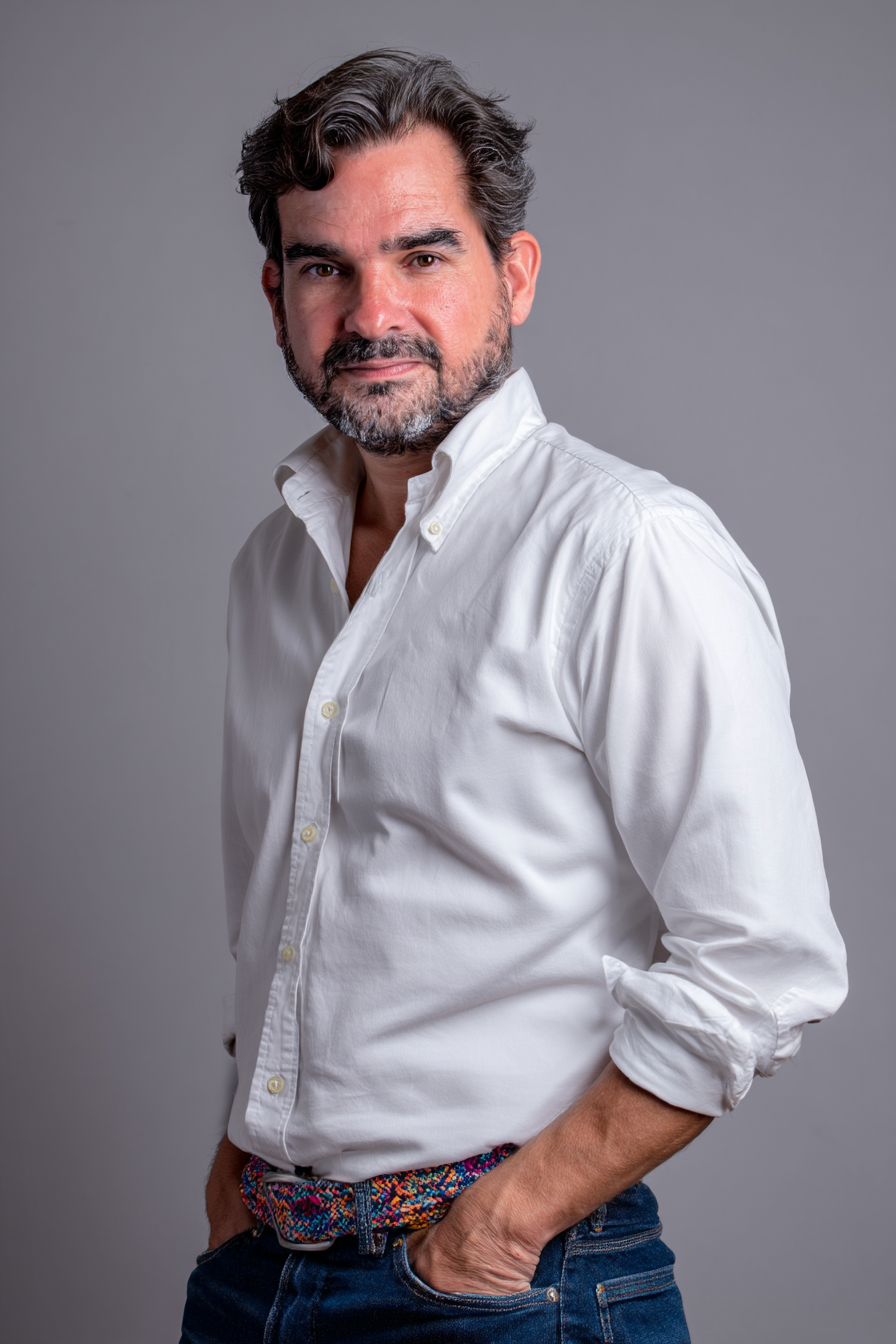
— Carlos Miranda Levy
Coordinator of Impact, Innovation and Intelligence