Intelligent Machines
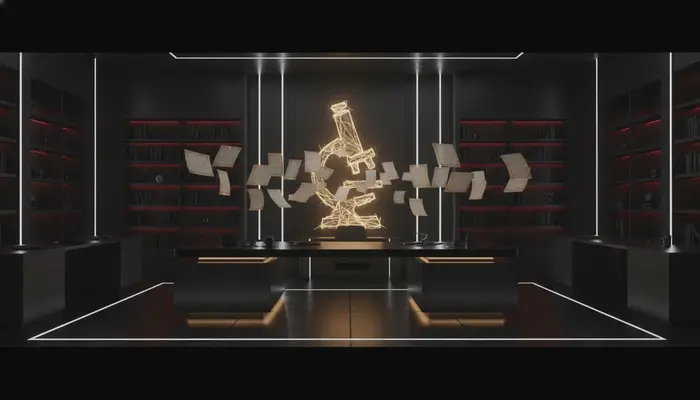
The ATM/ITM floor: real hardware, real failure modes, real people standing in front of it. Where a hypothesis about interaction, security or accessibility stops being a hypothesis.
Programme 03 · Residencies
A residency on the experimental areas.
A Fellow is a resident: someone who arrives with a defined question, works it on real machines, on the Virtual Financial Ecosystem, in the Open Sandbox and with the people of the Living Lab — supervised, on a real problem — and leaves findings that publish.
Not a visitor, and not a hire. A Fellow is a resident of the Lab for an agreed stretch of time, working a question that matters to the field on infrastructure almost nobody gets to touch.
The residency runs on the same discipline the Lab applies to every pilot: a defined problem, instrumentation from the first day, a supervisor who knows the floor, and a finding at the end that somebody other than its author can use.
Fellows work across the Lab’s experimental areas. Most residencies live mainly on one and borrow from the others.
The ATM/ITM floor: real hardware, real failure modes, real people standing in front of it. Where a hypothesis about interaction, security or accessibility stops being a hypothesis.
A digital twin of the financial ecosystem — simulated banks, rails, networks, bureaus and supervisors speaking real formats. Fellows get a persisted world of their own: their own seed, clock, ledgers and reports.
Cloud and on-premise environments: platforms, APIs, frameworks, agents, connectors and compliance systems — including the Financial Services AI Toolkit and CEMI Cumplimiento.
Where all of it meets real people: inclusion, financial education, customer experience and privacy, with consenting participants and the programmes already running.
Today this is a simulation, not a digital twin in the strict sense: there is not yet a finished system to be a twin of, since the instant-payments system is being built now. Our aim is to become the true digital twin of the Dominican financial ecosystem as it takes shape, following the work and guidelines of the Central Bank, the Superintendencia and the industry.
A residency comes in through one of these doors. The track shapes the supervision, the access and the shape of the output — not the ambition.
For researchers with a question and a method.
A study designed and run at the Lab: interaction research on the machines, measurement on the Ecosystem, an evaluation of a model or a mechanism. The output is a paper, a dataset description or a public findings report.
For builders who want to build the ecosystem itself.
Build inside the Virtual Financial Ecosystem: new actors, new scenarios, new rule packs — a bureau, a supervisor, an adversarial population, a process nobody has written yet — against published message contracts.
For the people who read the rules for a living.
Turn regulation into something executable: rule catalogues, compliance checks, AML and PLAFT/PADM work alongside CEMI Cumplimiento, and the evidence a supervisor would actually accept.
For designers of the moment where money meets a machine.
One continuous experience across the screen in a hand and the machine on the street: interaction, legibility, assisted flows, low-literacy interfaces, accessibility — tested on the hardware, with people, not inside a prototyping tool.
For the ones who ask who is being left out.
The programmes with real people: Financial Health, Finance for Women, the calculators, assisted cash-in and cash-out, the bridge between banked and unbanked. Here a Fellow designs, runs and measures programmes rather than devices.
The Lab cares about the question and the method, not the CV. These profiles usually fit.
A researcher, a team, a thesis with an empirical component. The Lab is the instrument your department does not have.
People a few years into engineering, design, data or compliance who want a hard problem, a supervisor, and something published with their name on it.
Founders with a technical question they cannot afford to answer alone — and a reason to answer it before the next build.
Regulators, supervisors and public-sector technologists who want to see the mechanics from the inside, on a floor where nothing is live.
Decades of practice in banking, payments, regulation or technology, put at the service of innovation in a defined engagement with a clear outcome — without the constraints of academia, a startup or a long-term R&D post. The Lab provides the structure; the Fellow brings the judgment.
There are no age requirements and no nationality requirements. The Lab is open to researchers and solutions from other countries: a residency can be on the floor, remote on the Ecosystem, or both.
The machines, the Ecosystem, the Sandbox and the Living Lab programmes — with someone who knows where the sharp edges are.
A persisted world on the Virtual Financial Ecosystem: your own seed, clock, ledgers, traces and reports — resettable, and yours for the residency.
From the Lab’s advisors and from CEMI’s intelligences: the Lab’s AI guides work alongside the human supervisors, on the floor and inside the Ecosystem.
A certificate of the work completed, issued by CEMI at the end of the residency, for academic recognition under your institution’s own rules — the same instrument the Lab offers its university counterparts.
Findings publish. Where the work was joint, authorship is joint and each party’s contribution is named. Private pilots that originate a line of work keep their confidentiality.
Fellows present. The Annual Competition and the Lab’s demo days are where a residency meets the industry it was written for.
A question, a method, and a description of what a good answer would look like. A residency is not open-ended browsing.
How long is settled with your supervisor when the cohort forms, and written down. There is no standard length: some questions need weeks, others a season.
The Lab is not a place to take a private result out of. Whatever is not covered by a private pilot’s confidentiality gets written up and released.
They are short, and they are not negotiable.
Applications are open on a rolling basis. There is no closing date and no fixed calendar: cohorts form as they fill — when a group of projects fits together, when a supervisor is free, and when a partner university or a sponsor backs the line of work.
Every application is read. A conversation follows the ones that fit: the question, the supervision it needs, the access it implies. What is agreed goes in writing before the residency starts — the project, the duration, the experimental areas, the publication plan and the confidentiality that applies.
Universities, institutions and sponsors can have a cohort built around a line of work of their own: a named challenge, a research question, a set of residencies attached to a programme. Write to the Lab and it gets designed together.
The residency is designed along CEMI’s Impact Arc — Engage → Enable → Inspire → Empower → Connect — created by Carlos Miranda Levy as his creed, «NEVER HELP», and inherited by CEMI as its social-impact perspective.
You bring the question. The Lab does not hand you a problem it finds convenient.
Access, instruments, supervision and method — the capability to answer it yourself.
A floor where things that are supposed to be impossible are running, and people who are running them.
The project stays yours. The Lab is scaffolding; it never takes the work over.
Publication, the Annual Competition, demo days, the Lab’s partners — so the work outlives the residency.
The Impact Arc is an organizational philosophy and a design position, not an evidence-based framework. It aligns with research on agency and self-determination; it is not derived from it, and the Lab does not present it as validated.
No. University teams are one of the profiles, not the requirement. Early-career professionals, founders and public servants apply on the same form.
Terms are agreed per cohort and per line of work, and depend on the institution or sponsor backing it. No amount is promised on this page and none is published. Ask in the conversation that follows your application.
Partly. The Virtual Financial Ecosystem and the Open Sandbox are reachable from anywhere. The Intelligent Machines and the Living Lab are on the floor, and a residency that depends on them needs time on site.
Findings publish, and authorship reflects contribution. Where a private pilot originates or funds the work, its confidentiality is respected and the publishable part is agreed in writing before the residency starts.
Yes — cohorts are often formed that way, with a partner university or a sponsor backing a line of work. Say so in the application and the Lab will talk to your institution directly.
A certificate issued by CEMI describing the work completed and the hours involved — the same instrument the Lab offers the universities it works with, for recognition under each institution’s own academic rules. CEMI issues it; the institution decides what it recognizes.
No. Simulated data and consenting participants, always. Data protection is one of the Lab’s working areas — treated as something to design and test for, not as a disclaimer.
There is no fixed calendar. Applications are read as they arrive, and a cohort forms when the projects, the supervision and the backing line up.
One form, read by the Lab team. The parts that carry the most weight are the project and its abstract.