Financial Innovation Lab
The Experimental Areas
Intelligent Machines / The Virtual Financial Ecosystem / The Open Sandbox / The Living Lab
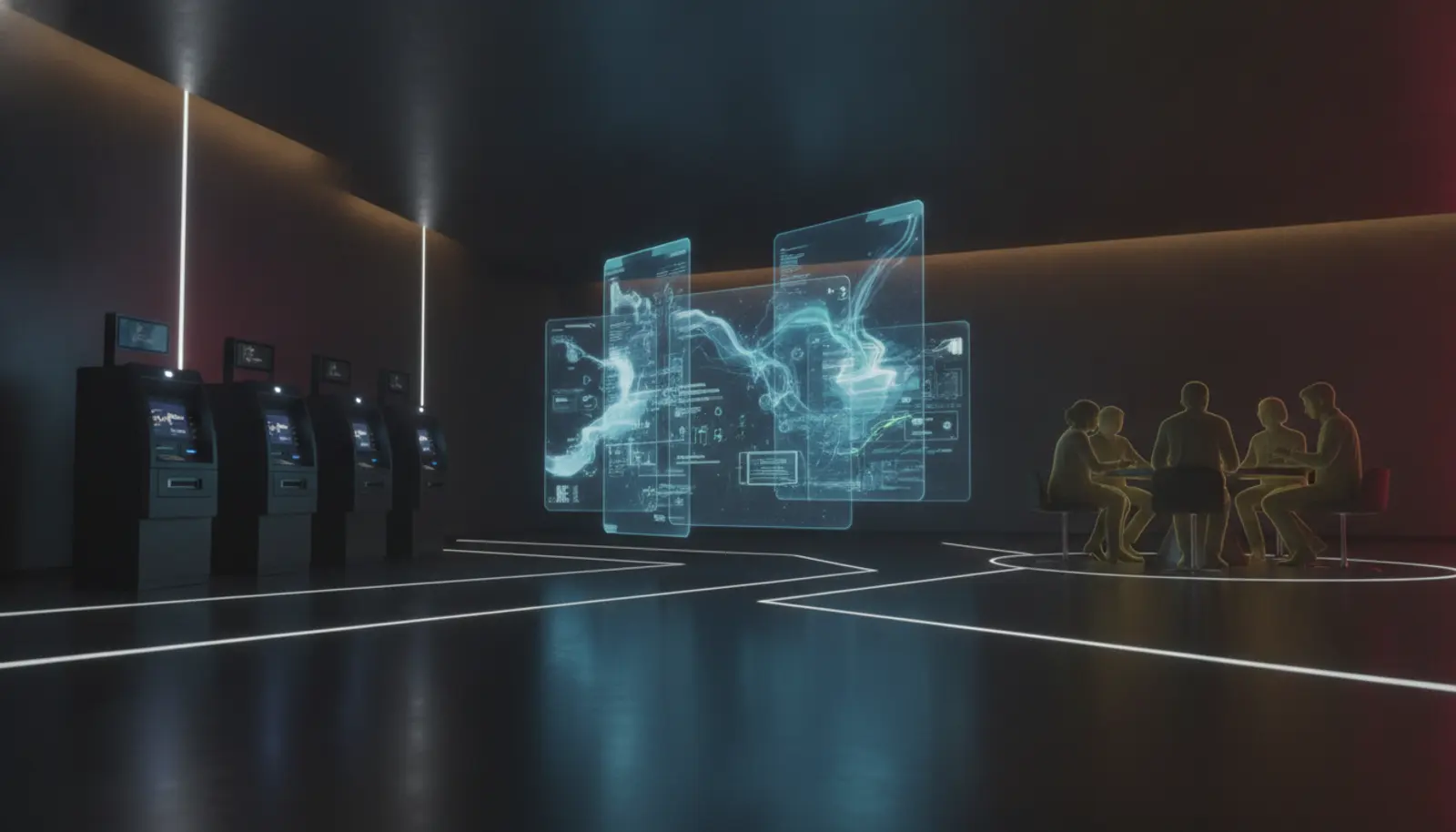
The Lab runs on four experimental areas — interconnected, integrated, and at the service of the industry, stakeholders, partners and academia. Hardware experiments lean on the software rails, software experiments prove themselves on physical machines, and both are exercised against a simulated financial ecosystem — before all of it is validated where it finally matters: with people.
Intelligent Machines — the physical lab
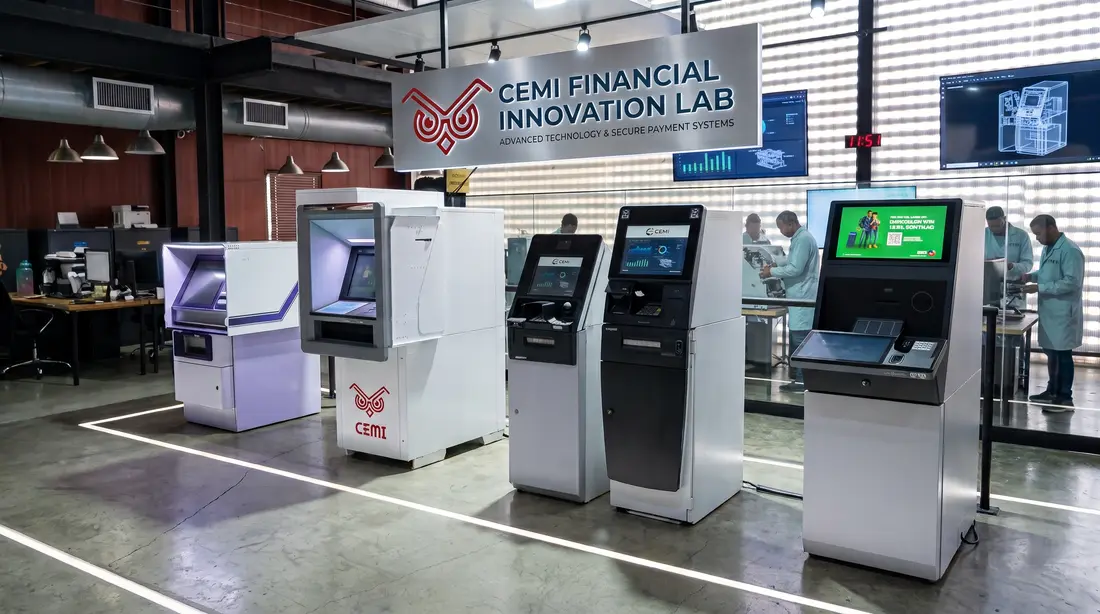
The latest generation of ATM/ITM and self-service hardware, enabled and enhanced with artificial intelligence — real machines on a real floor. This is where our flagship Intelligent ATM Program operates.
Top-of-the-line ATM and ITM machines, wired for experimentation rather than production duty. They run face recognition, accept touchless cards, host interactive experiences, complete digital onboarding and close online purchases — and every interaction can be observed, measured and improved.
- Biometric flows tested on public-terminal hardware, not laptop webcams
- Contactless and card-present payment paths, end to end
- Onboarding a first-time user at a machine — the hardest UX in finance
- Purchases that begin online and finish at a terminal, or the reverse
The Virtual Financial Ecosystem — two branches
The Virtual Financial Ecosystem has two branches: the Transactional Ecosystem, a digital twin of the financial ecosystem that runs today, and the Economic Mirror, a simulation of an economy and its capital market, in development.
Branch 1 — the Transactional Ecosystem: a digital twin of the financial ecosystem
Simulated banks, the Central Bank’s rails — the LBTR and the instant-payments system SGPI — card networks and acquirers, electronic-payment entities, credit bureaus, identity, regulators and the financial-intelligence unit. All of them speak real formats, keep real state and obey the Reglamento de Sistemas de Pago, so an application runs a whole process end to end without touching a single real institution.
One synthetic population moves through every counterpart, so a process that crosses six organizations is exercised as one process, under the rules that will apply when it is real: onboarding to settlement, a card cycle, a suspicious-transaction report. No real people, no real money — and an instrumented report at the end.
- Central Bank
- LBTR
- SGPI · instant payments
- Banks
- Electronic-payment entities
- Acquirers & sub-acquirers
- Card networks
- Credit bureaus
- Identity
- Regulators
- Financial-intelligence unit
Ready for 2027, today.

Branch 2 — the Economic Mirror In development
A simulation of an economy and its capital market, designed to model the impact of financial operations, policy and regulatory changes — a capital-market reform, the interoperability of stock exchanges, mergers of institutions, new securities products — on the economy’s indicators and sectors, and to measure the accuracy of its own predictions. It is in development: there is no model yet, and it produces no results today. Its future home is mirror.financialecosystem.io.
The Open Sandbox — the software environment
Cloud and on-premise environments of platforms, APIs, frameworks, web services, integrations and Anti-Money-Laundering compliance systems — plus agents, skills, plugins, data connectors, wrappers and enterprise capabilities — where products and solutions are tested, interconnected, integrated and showcased before anyone signs anything.
Live in the Open Sandbox today: Financial Services AI Toolkit — 40+ agents, skills, plugins, connectors and integrations · CEMI Cumplimiento — AML compliance platform (PLAFT/PADM)
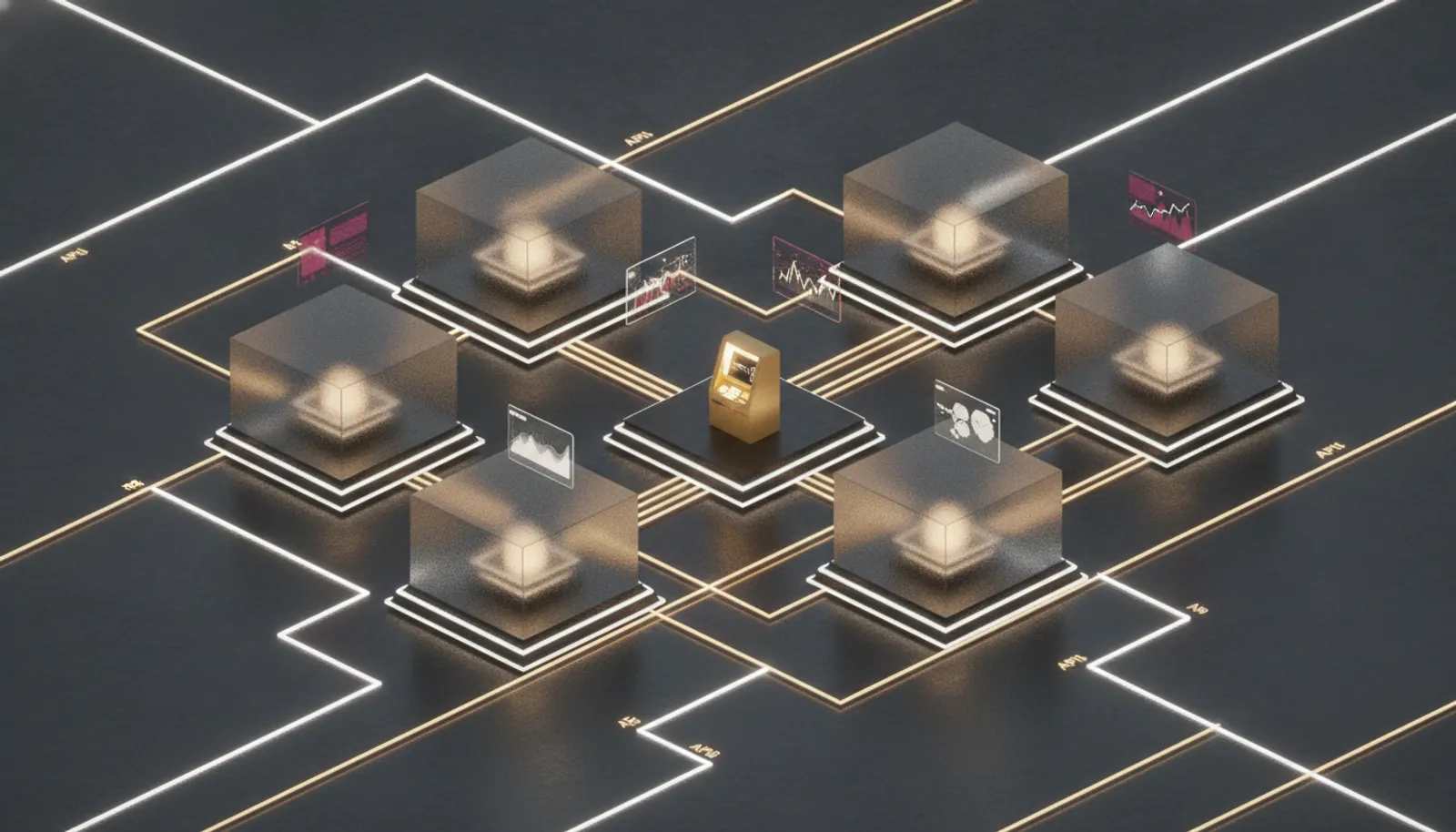
The Lab is the integration of four experimental areas; two of them are software: the simulated ecosystem, and the Open Sandbox — APIs, frameworks, web services, integrations — where products and solutions are tested, interconnected, integrated and showcased — identity, payments, blockchain, AI services and data flows exercised against each other before anyone signs anything.
Test
Your product against realistic rails, data and adversaries.
Interconnect
Your APIs against other participants’ systems — the integration is the experiment.
Integrate
Into full journeys that end on the physical floor.
Showcase
To partners, sponsors and customers, on real machines instead of screenshots.
The Living Lab — the human experimental area
People are the fourth experimental area. The Living Lab is where technology meets its users under real conditions — social inclusion, capacity building, educational programs and user engagement. Programs already run here today; the floor is laid for customer-experience testing, user awareness and onboarding research.
Financial Health (Salud Financiera) · Finance for Women (Finanzas para Mujeres) · Financial Calculators