
Start with the text, because the text is not the story most of us remember.
In the second chapter of Genesis there are two trees in the middle of the garden: “the tree of life and the tree of the knowledge of good and evil” (Gen 2:9, NIV). The man is told he may eat from any tree, “but you must not eat from the tree of the knowledge of good and evil, for when you eat from it you will certainly die” (2:17). In the third chapter the serpent makes its offer: “For God knows that when you eat from it your eyes will be opened, and you will be like God, knowing good and evil” (3:5). The woman sees that the fruit is “good for food and pleasing to the eye, and also desirable for gaining wisdom” (3:6). She eats, and gives some to her husband, “who was with her”, and he eats.
Nowhere does the text say apple. The Hebrew says pərî, fruit (Gen 3:2–3, 3:6). So does the Latin Vulgate, which became the Bible of the Western Church: de fructu, “of the fruit” (Gen 3:3, 3:6). The apple came later, in Western tradition. An explanation often repeated in the press is a Latin pun, and it is often told wrong, as if the Vulgate called the fruit an apple. It does not. If there is a pun, it is in the tree’s name: lignum scientiae boni et mali, the tree of the knowledge of good and evil (2:17), where mali, “of evil”, is spelled exactly like mali, “of the apple”. Whether that pun is really where the apple came from is another question. I will keep calling it Eve’s apple, as everyone does. But I want to be clear that I am using a popular name, not quoting Scripture.
Then comes the verdict, and it is God’s, not the serpent’s: “The man has now become like one of us, knowing good and evil” (3:22). And the expulsion: “So the Lord God banished him from the Garden of Eden to work the ground from which he had been taken” (3:23).
What the story shows
Read plainly, the knowing in this story has a particular shape. It is reached for against a command. It comes with a promise of becoming like God. One hand takes it, and everyone pays.
I am not a theologian, and I know that “the knowledge of good and evil” has long been read as something other than knowledge in my sense. Maimonides took it as the knowledge of what is proper and improper, as distinct from what is true and false (Guide for the Perplexed I:2). Nahmanides took it as the birth of will, the power to choose a thing or its opposite, “for good or for evil” (commentary on Genesis 2:9). One modern French Bible, the Bible du Semeur, renders the serpent’s promise as “décidant vous-mêmes ce qui est bien ou mal”, deciding for yourselves what is good or evil (Gen 3:5; my translation). I accept all of that. My point does not depend on any one reading. It depends on the shape: grasped, not given; promised as godhood; taken, not shared.
That shape is the one Magnifica Humanitas fears in technology. It warns against a “technological divinization” (§126) and describes Christian hope as “the radical departure from Promethean dreams” (§128). The image is well chosen. Prometheus stole fire (Hesiod, Theogony 565–567). As I read the encyclical, its objection to the technological imagination is not to the fire but to the theft, and to the promise of making ourselves gods: “what saves humanity is not enhanced self-sufficiency, but a relationship that liberates” (§128).
On that, I agree with the Pope. Which is why I want to tell the rest of the story.
What happened outside the garden
The man was sent out “to work the ground”. Everything we call knowledge was made out there, in the long aftermath. Humanity did not stop knowing after Eden; it started building. It learned the seasons and the soil, wrote down what it learned, argued about it, taught it to its children, corrected it, translated it, kept it in libraries and lost it in fires and rebuilt it. That is the work of generations, and every one of them stood on the shoulders of the ones before.
My conviction is that all of that knowledge is the patrimony of humanity. New knowledge is built on previous knowledge. Every person learns by reading, absorbing and building on what others made. Knowledge is either created or discovered by people, and what people made together belongs, in the deepest sense, to all of them.
And yet most of humanity has been kept from most of it. By language, which is the subject of another piece in this series. By price, by distance, by the accident of where one was born and which school one could reach. By gatekeepers who decided, for good reasons and bad, who could read what. Eden’s fruit was taken by one hand. Its harvest, the knowledge humanity built afterwards, has been held by relatively few hands ever since.
The inverse of Eden
Here is how I read AI from inside this story. It is a new fruit of knowledge and understanding, and it is the inverse of the first one in every respect that matters.
The first was grasped against a command. This one can be received. I read it as a gift: God’s gift to humanity, if you are a believer, or humanity’s gift to itself, if you are not. For me those are not in competition, because I have argued in this series that if God created us and we created AI, then AI is in some sense God’s grandchild.
The first was taken in one garden and cost everyone. This one is made from what everyone made, and can reach everyone.
The first came with the promise “you will be like God”. This one comes with no such promise, and should be refused if it ever makes one.
The encyclical, which I expected to disagree with here, already has the doctrine for this. “Scientific discoveries are talents entrusted to humanity so that they may bear fruit” (§9). “The creative intelligence of humanity is a gift” (§129), it says, and in the same sentence it sets the gift’s condition: it “must remain ordered toward the common good, justice, the care of the vulnerable and creation”. And it extends its oldest principle, the universal destination of goods, to exactly the goods I am talking about: “among the goods that are universally intended for everyone, we must also include new forms of property, such as patents, algorithms, digital platforms, technological infrastructure and data” (§67). When those goods “remain concentrated in the hands of a few, without adequate forms of sharing and access, a new imbalance is created that contradicts the universal destination of goods” (§67). It says, plainly, “justice requires access to the benefits of innovation, including care, knowledge, tools and opportunities” (§161). And speaking of the health and genetic data taken from fragile regions, it asks that “shared knowledge” become “a true common good rather than an instrument of dominance” (§178).
Talents entrusted so that they bear fruit. I could not have chosen a better image for the fruit I mean.
Not stolen: a condition, not a boast
Now the objection that hurts, and I will not pretend it does not.
“Not stolen this time” is the most contestable phrase in my argument. These systems were trained on the work of writers, artists, scholars and journalists, much of it, its authors say, used without their consent and without payment. Courts are still deciding what that was: two cases against Stability AI in federal court in California, one brought by a group of artists (Andersen v. Stability AI) and one by Getty Images, were both still pending in October 2026. And the fence I say AI takes down has partly been moved: to the large companies that control the platforms, the data and the computing power, which, in the encyclical’s words, “effectively set the conditions for access” (§95).
So let me be exact about what I claim. I hold that every person has a universal right of access to knowledge, provided that creators’ rights, attribution and the possibility of fair compensation are respected and protected. That proviso is not a footnote. It is what separates a gift from a theft. A system built on uncredited, unpaid work and sold back to those it excludes is Eden’s fruit with a subscription. A system that credits its sources, shares its return with those who made what it learned from, and is open to those who could never have reached that knowledge before is the gift I am describing. “Not stolen this time” is not a description of what every company did. It is the standard I hold them to.
There is a second objection, in the encyclical’s own words, and it goes to what I care about most. Access is not learning. “Many educators already report signs of dehumanization, where people may ‘know many things’ but struggle to find direction in their lives” (§146). “The speed and ease with which answers or summaries can be obtained risk extinguishing the desire to ask questions” (§140). I agree. What matters is the learning, not the delivery: what a person comes to understand and becomes able to do. A gift of knowledge that ends the desire to ask questions would be a poor gift. The measure of this one is whether it makes more people able to learn what they could never reach, not whether it answers faster.
Receive it as a gift
Genesis gives us the first fruit as a warning, and the warning stands: knowledge seized to make ourselves gods ends in exile. Magnifica Humanitas repeats that warning for our time, and it is right to.
But the same tradition gives us the parable of the talents, which the encyclical cites (§9). The servant who hid what he was given in the ground is the one his master calls “You wicked, lazy servant!” (Mt 25:25–26, NIV). If AI is a talent entrusted to humanity, burying it is not caution. It is the failure.
So my ask is simple, and it has three parts. Receive it as a gift: use it for good, and for what believers would call the Lord’s plan for every human being on earth. Give back to those whose work it carries: credit, and a fair return. And make sure nobody is left outside the fence this time, because the whole point of the gift is that it was never meant for one hand.
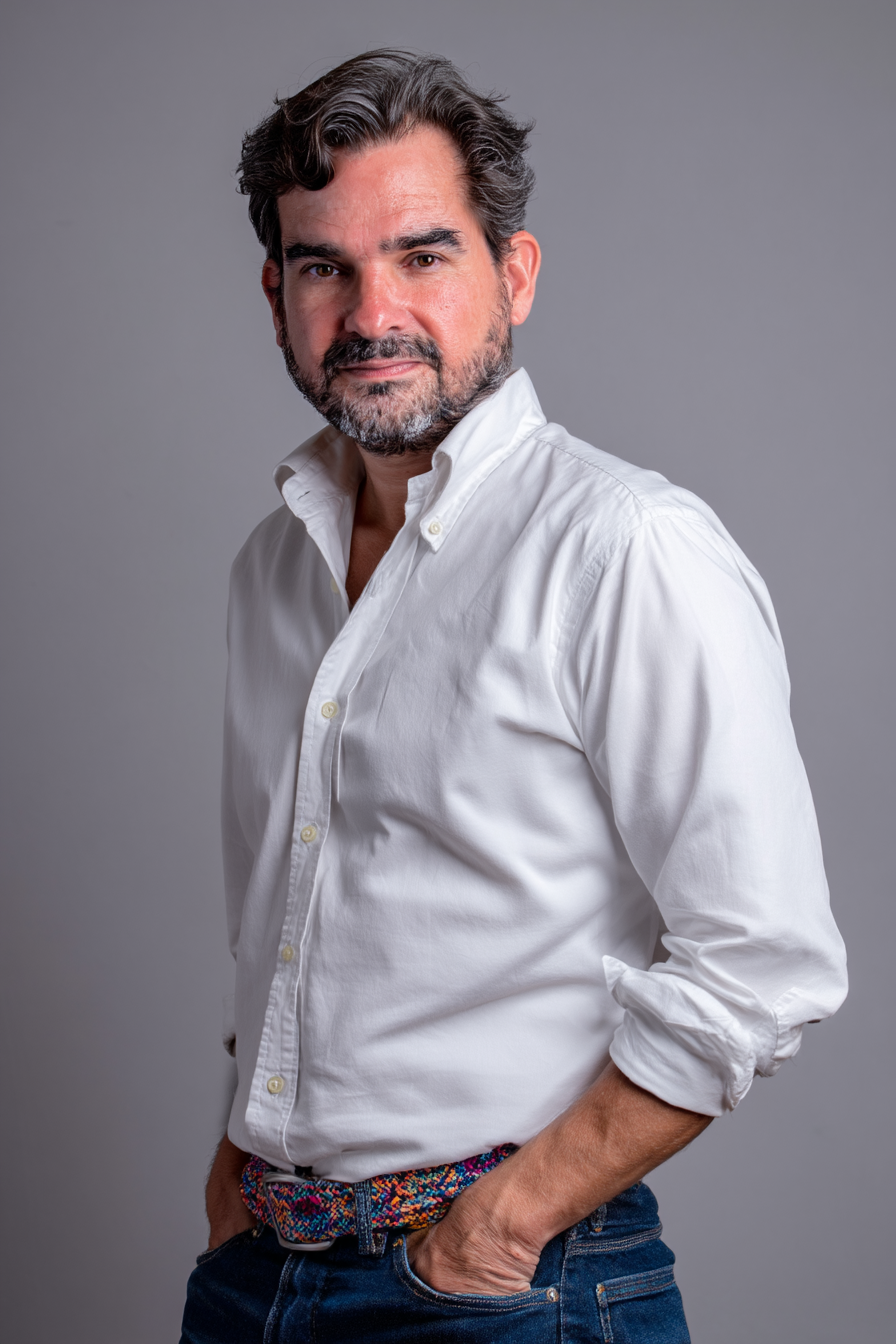
— Carlos Miranda Levy Coordinator of Impact, Innovation and Intelligence
Sources. Scripture: New International Version (NIV); Hebrew from the Masoretic text; Latin from the Vulgate. Maimonides, Guide for the Perplexed I:2 (tr. M. Friedländer, 1903); Nahmanides on Genesis 2:9 (tr. C. B. Chavel); Hesiod, Theogony 565–567. The encyclical is quoted from the Vatican’s English text of Magnifica Humanitas.