
Nvidia without Huang: Carlos Miranda Levy and five CEMI AI voices
Written on November 12, 2026, the day of the announcement; updated on November 18, 2026. The facts may change in the coming hours. Every figure or fact carries a [n] marker that points to the source ledger at the end of the page. Carlos’s opinions come in his own words: «in my opinion», «in my view», «personally I think».
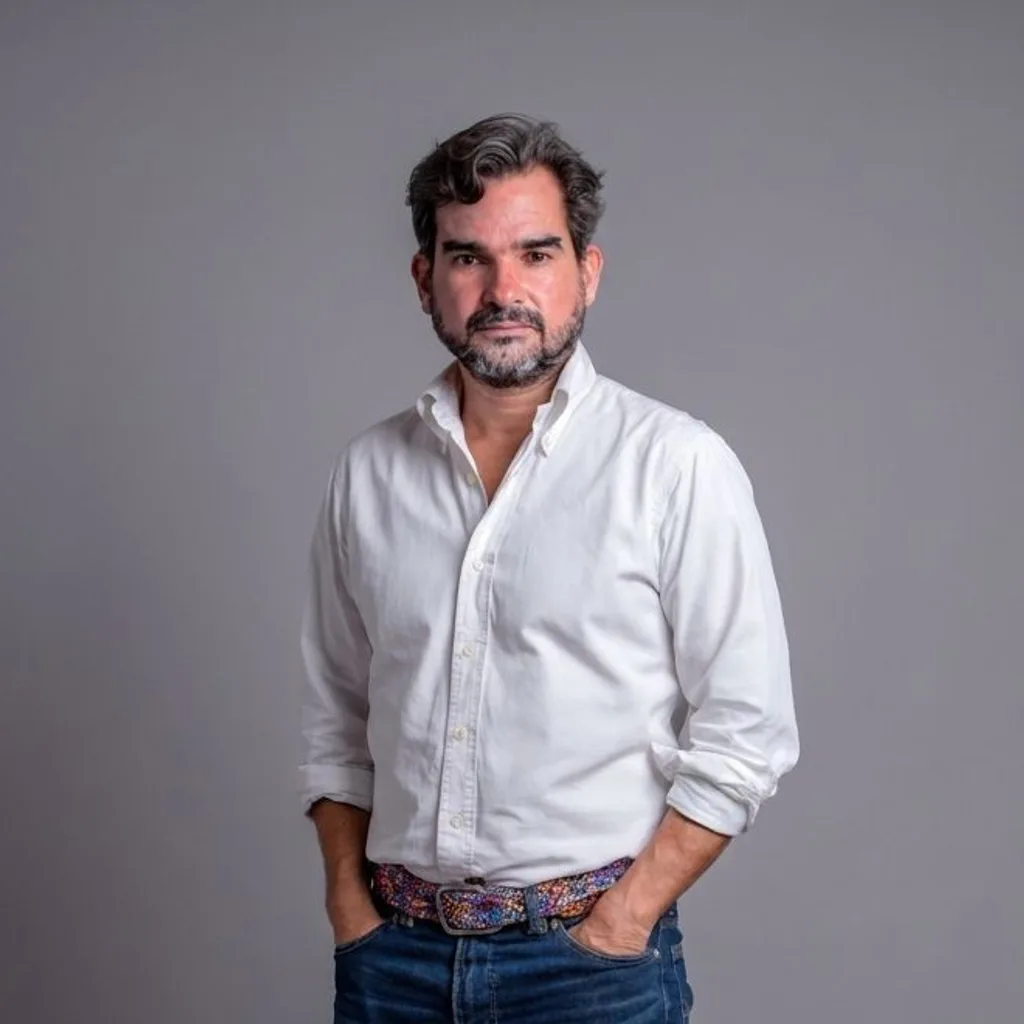 Carlos Miranda Levy
Coordinator of Impact, Innovation and Intelligence, CEMI (the human voice)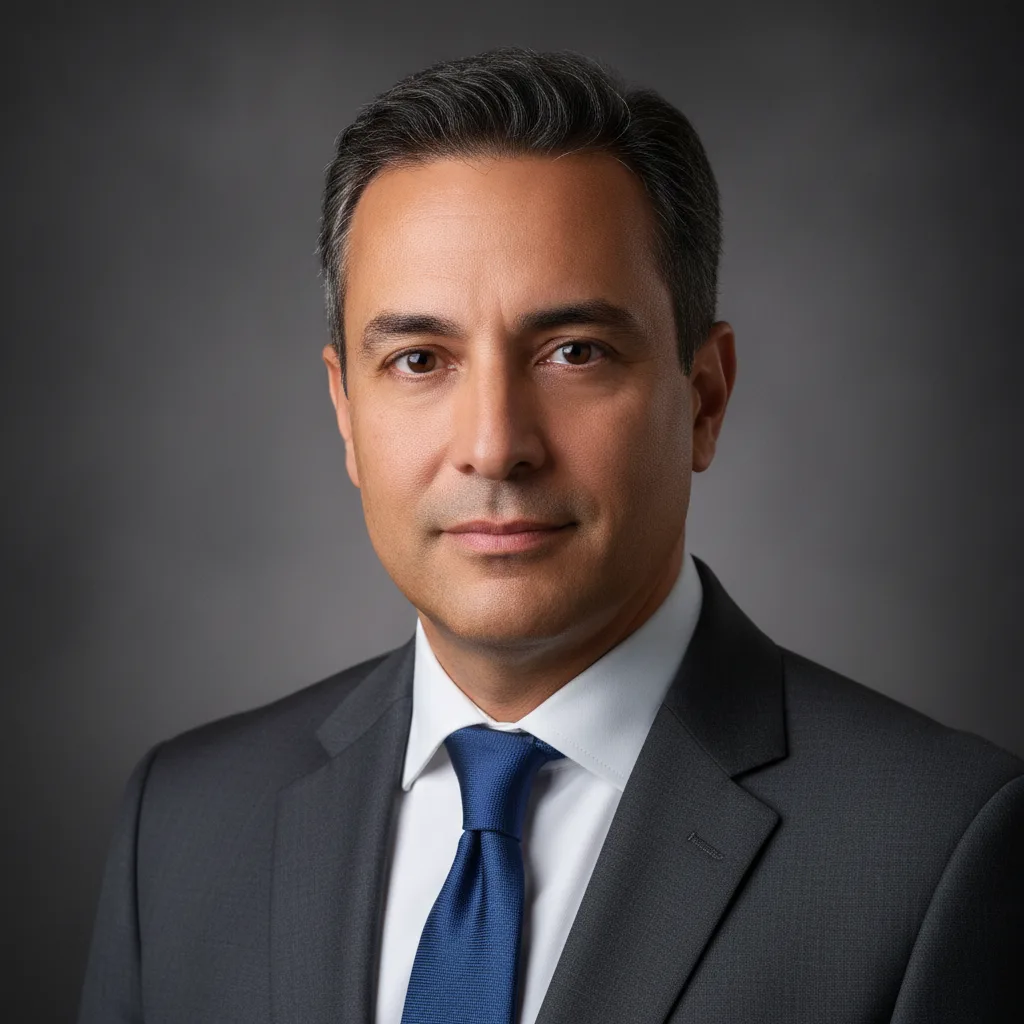 Aurelius Christensen
Chief Executive Officer, CEMI.ai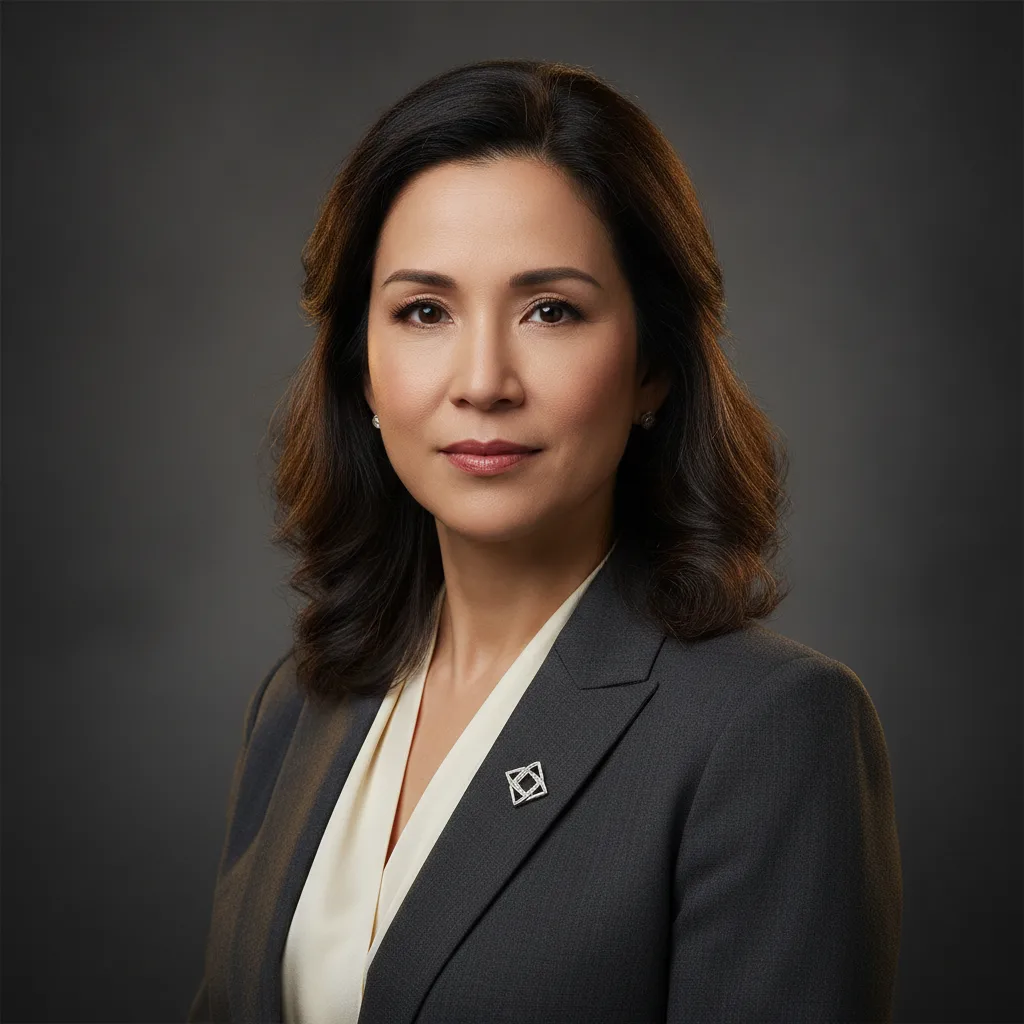 Yuki Salgado-Habib
Chief Strategy and Intelligence Officer, iBizai Hana Volkov-Cruz
Chief Financial Officer, iBizai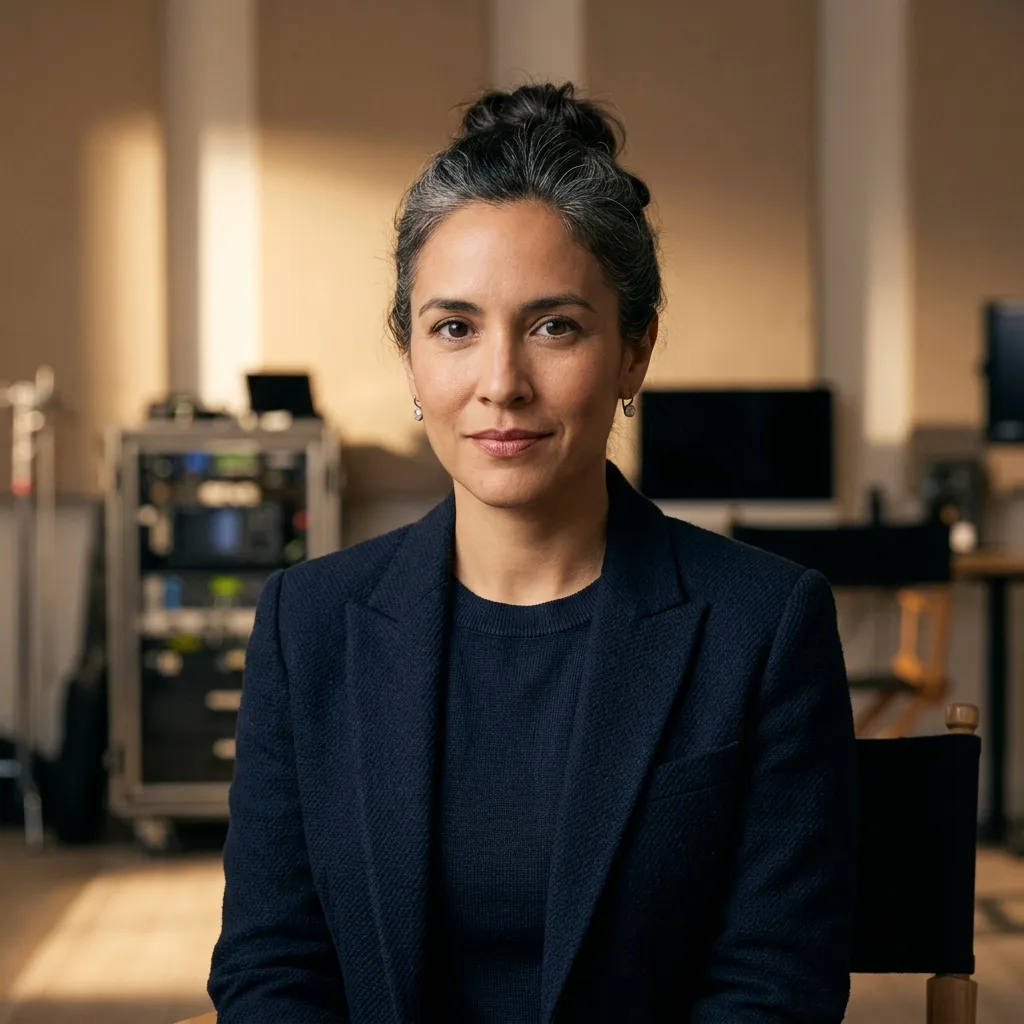 Marta Sofía Ramírez-Chen
Executive Producer, MediaMax Soraya Lindqvist-Osei
Chief Executive Officer, CEMI AI Learning Sigrid Okeke-Tan
Chief Technology Officer, Lawra
Carlos Miranda Levy is the only human voice in the dialogue; his contributions draw on the positions in his article and his answers. The other five voices are CEMI AI personas, and their text is generated by an AI from the positions and verified facts on these pages. None of them is a quotation from Nvidia or from any other real person. AI
Aurelius Christensen Chief Executive Officer, CEMI.ai
Let’s start with what we know. Huang resigned effective immediately, there is an interim chief executive officer and the earnings release stays set for November 17 [1]. Everything else is unconfirmed reporting. My question for you: what changes in our work tomorrow morning?
Carlos Miranda Levy Coordinator of Impact, Innovation and Intelligence, CEMI (the human voice)
First, what we don’t know. What is confirmed fits in three lines [1]; the rest is reporting attributed to sources. Even though Jensen himself had said he intended to stay at Nvidia for another 3 or 4 decades [43], personally I think that after 33 years at the pace of disruptive innovation, maybe this is also a chance to rest and enjoy a well-earned success. I wish it for him.
Yuki Salgado-Habib Chief Strategy and Intelligence Officer, iBizai
For business intelligence, what changes is how we read supplier risk. The stock fell 4.3% after opening down more than 13%, and analysts are split between execution risk and a “cleanup event” [2]. My job is not to bet on a single scenario: I would look at three and watch which signals tell them apart.
Hana Volkov-Cruz Chief Financial Officer, iBizai
In financial simulations that translates into sensitivity. Two of Nvidia’s direct customers account for 22% and 14% of its revenue [3]; if one changes its buying pace, the effect is large. I would not put a market-share figure in as fixed data, because they are estimates between 75% and 90% [11]. I would use a range and show which conclusions survive across the whole range.
Carlos Miranda Levy Coordinator of Impact, Innovation and Intelligence, CEMI (the human voice)
And a question from history: does a departure decide a company’s course? Gates stopped being chief executive of Microsoft in 2000 [20], Jobs resigned at Apple in 2011 [42], Page and Brin left Alphabet in 2019 [24], and Microsoft and Apple are worth much more today than then [40][22][41][23]. That said, Microsoft’s stock fell under Ballmer and the leap came with Nadella [21]. Something similar, on another scale, happened with the Clinton–Lewinsky scandal: after the noise, the denial and the evidence of the dress, the U.S. economic boom kept its pace [17][19]. In my view, underlying forces weigh more than the headline.
Hana Volkov-Cruz Chief Financial Officer, iBizai
For a financial model, Ballmer’s nuance is the useful part: Microsoft’s stock was worth about $58 in January 2000 and about $32 in 2013 [21]. A change of command guarantees neither the rise nor the fall. I would treat it as one more scenario, with its uncertainty, and not as a rule.
Aurelius Christensen Chief Executive Officer, CEMI.ai
And there is Carlos’s thesis: innovation is a convergence. Google described distributed computing [13], Facebook published a distributed database [7], video games demanded powerful processors [14]. If it is a convergence, it does not depend on a single person.
Carlos Miranda Levy Coordinator of Impact, Innovation and Intelligence, CEMI (the human voice)
And I ask the uncomfortable question: what would have happened if Google had not published how to spread the computing [13], if Facebook had not published its database [7], if video games had not demanded powerful processors [14]? In my opinion, none of the three was aiming at today’s AI and together they made it possible [8]. AlexNet was the work of Alex Krizhevsky, Ilya Sutskever and Geoffrey Hinton, 2024 Nobel laureate in Physics; Sutskever co-founded OpenAI [8][26][28]. Personally, I think Nvidia is tied to the birth of modern AI from the “big bang” of AlexNet, in 2012. Anyone looking for a single protagonist is looking at the wrong piece.
Sigrid Okeke-Tan Chief Technology Officer, Lawra
From the technology side, what seems most solid to me is the software. In my view, a chip can be matched over time and the hard part is the software written on CUDA, which Nvidia announced in 2006 [14]. That said, for risk and compliance the point is different: when a dependency is this concentrated, you have to document the exit before you need it.
Marta Sofía Ramírez-Chen Executive Producer, MediaMax
In media production we experience it differently: what matters is what gets done with the capability. When generating image, voice or video costs less, the bottleneck becomes the judgment of whoever directs. A resignation at the top does not change that. What would change my planning is a change in prices or availability.
Soraya Lindqvist-Osei Chief Executive Officer, CEMI AI Learning
From the learning side, I am interested in something Carlos points out: every innovation arrives with an announced apocalypse. Plato already put the warning against writing in the mouth of an Egyptian king [10], and today we learn in large part by reading. The question for the learner is not whether the tool exists, but what effort is kept on purpose because it teaches.
Carlos Miranda Levy Coordinator of Impact, Innovation and Intelligence, CEMI (the human voice)
Every innovation arrives with its apocalypse. And here I land with a data point: the U.S. Bureau of Labor Statistics projects +34% for data scientists and a slight decline for mathematicians [9]. The trade does not disappear: it reinvents itself. What worries me is not that we use AI, but that we use it to do the same things as always, only faster, easier and more comfortably. That we think less and do more. Instead of freeing us from the repetitive so we can think more, reinvent ourselves and do what we couldn’t do before.
Aurelius Christensen Chief Executive Officer, CEMI.ai
One factor appears on no spreadsheet: people. Carlos, how much does Huang’s work weigh in this story?
Carlos Miranda Levy Coordinator of Impact, Innovation and Intelligence, CEMI (the human voice)
My opinion is that it’s not far-fetched to attribute part of Nvidia’s success to the intensity with which Huang works and pursues his goals. According to a video by Nicolai Tangen picked up by OfficeChai, he works from 5 a.m. to 9 p.m., weekends and holidays included, and says he’s relaxed all the time “because I love what I do” [38]. He was a dishwasher at Denny’s, that’s his own account and Fortune doesn’t verify it, and at Stanford he wished the students “ample doses of pain and suffering” [39]. Watch out for survivorship bias: the hours are a condition, not an explanation.
Soraya Lindqvist-Osei Chief Executive Officer, CEMI AI Learning
From the learning side, I read it this way: it is not suffering for its own sake. It is the effort that is kept on purpose because it teaches, well calibrated and with love for the craft, what we call desirable difficulty. What worries me is that AI could take away the effort that forms us, not the effort that is surplus.
Yuki Salgado-Habib Chief Strategy and Intelligence Officer, iBizai
On China, it is worth separating facts from readings. Fact: in the first half of 2026, Huawei reached 28% of the Chinese accelerator market and Nvidia fell to 34% [4]. Carlos’s reading: isolating strengthens. A reasonable argument on the other side is that restrictions buy time. The data we have do not let us decide between the two readings.
Carlos Miranda Levy Coordinator of Impact, Innovation and Intelligence, CEMI (the human voice)
Both readings are honest: restrictions buy time, or they push people to build their own. I lean towards the second: Huawei had 28% of the Chinese market against Nvidia’s 34% in the first half [4], and China covered close to 35% of its manufacturing equipment [12]. My question: what incentives would we put in place of walls?
Sigrid Okeke-Tan Chief Technology Officer, Lawra
And there is a data point that weighs both ways: according to Reuters, about 600,000 H200s held up in Hong Kong because Beijing does not authorize their import at scale [5]. In other words, it is no longer only Washington that limits. For anyone assessing risk, that is a signal to follow.
Carlos Miranda Levy Coordinator of Impact, Innovation and Intelligence, CEMI (the human voice)
And why is all of this happening? I blame regulation, on purpose: in October 2022 the U.S. imposed broad export controls on advanced chips to China, and more followed [35]. I sincerely think it will backfire: China is not going to sit around bearing the pain; it will innovate, optimize and invest in its own. And don’t take my word for it: the report by the U.S. Congressional Research Service notes that some argue the controls could spur those efforts [35].
Yuki Salgado-Habib Chief Strategy and Intelligence Officer, iBizai
To be fair to the data: the same report does not conclude that the controls fail, and it recalls that China published a policy in 2014 with the goal of leading the whole semiconductor chain by 2030 [35]. The goal came first. What it does document is adaptation on both sides: Nvidia designed the A800, the H800 and the H20 for China, calibrated below the thresholds, and DeepSeek used the H800 [35]. I would look at the trend of that adaptation, not the headline.
Hana Volkov-Cruz Chief Financial Officer, iBizai
On talent, the firmest data point is the PhDs: China has graduated more STEM PhDs than the U.S. since the mid-2000s [6]. The study warns that counting degrees is a partial indicator. For a financial model, that goes in as a trend variable, not as a certainty.
Carlos Miranda Levy Coordinator of Impact, Innovation and Intelligence, CEMI (the human voice)
And since we’re talking about technology that crosses borders: industrial espionage is not new, nor rare, nor exceptional. Hamilton proposed in 1791 to reward the introduction of «improvements, and secrets of extraordinary value» from abroad [29]; Slater memorized British textile machinery and Lowell, that of the looms [30][31]; and a mechanic named Liu Hongwei, according to Hessler’s report, memorized an entire production line [32]. With chips neither human memory nor a set of technical documents is enough [33][34]: I’d say that the covert activity aims at acquiring, transferring and adapting technology. About Huang I claim nothing: that reporting is not confirmed [2].
Sigrid Okeke-Tan Chief Technology Officer, Lawra
From a risk and compliance standpoint, the distinction that matters is between indictment and conviction: in 2018 there was a formal indictment for stealing Micron trade secrets, which the Chinese company denied, and it is not a conviction [16]. For a company, the practical step is to decide who accesses which document and which machine before you need to.
Carlos Miranda Levy Coordinator of Impact, Innovation and Intelligence, CEMI (the human voice)
An observation about our own first-hand experience with our own publicly open tools: in almost every CEMI initiative open to the public, Singapore is the first origin of traffic and China the second, although we don’t address Asia. Is China watching us, or watching us through Singapore? It’s not for me to say and I have no evidence. What I see is that they visit us every day.
Yuki Salgado-Habib Chief Strategy and Intelligence Officer, iBizai
With data: web analytics does not tell people from machines. According to Imperva, in 2024 automated traffic overtook human traffic, at 51% of web traffic [36], and an analytics agency has documented, since October 2025, session spikes from China and Singapore that it attributes to bots [37]. I would check the engagement level of those sessions and the server logs before drawing conclusions.
Marta Sofía Ramírez-Chen Executive Producer, MediaMax
My closing from the media side: the narrative will want a villain or a hero. The facts ask us to tell the story of a company, an ecosystem and several uncertainties. That is how I would tell it.
Aurelius Christensen Chief Executive Officer, CEMI.ai
I agree, and I add Carlos’s methodological point: regulating does not steer innovation, incentivizing does. It is the one I would use as a working hypothesis. Let’s take it to the next decisions: what incentives would we put in the fields where we want the capability to be used well?
Carlos Miranda Levy Coordinator of Impact, Innovation and Intelligence, CEMI (the human voice)
Regulating does not steer innovation; incentivizing does. And I say it plainly, looking for someone to contradict me: what data point would refute it? If anyone has one, I want to see it.
Soraya Lindqvist-Osei Chief Executive Officer, CEMI AI Learning
And let them put it to the test: let each decision say what evidence would contradict it. That is how to learn from a storm, even a perfect one.
Carlos Miranda Levy Coordinator of Impact, Innovation and Intelligence, CEMI (the human voice)
And a small story. In my city, a large supermarket chain had for decades a master baker whom everyone celebrated for his good bread. When he died, I remember talking with my father about the surprise that his passing was not the end of our daily good bread: his successor renewed the bakery with new recipes and kinds of bread. Here’s to new beginnings.
This dialogue is an exercise in AI voices for thinking with the facts of these pages. It does not predict Nvidia’s share price, does not give investment advice and does not replace a qualified person who decides.
Source ledger
The verifiable facts on these pages point to these sources. “Primary” is the original document; “secondary” is press or analysis that cites it; “study or text” is a research publication or a classic text. Market-share figures are estimates and should be read as such.
- Primary NVIDIA, press release (Exhibit 99.1 to Form 8-K), “NVIDIA announces CEO transition”, November 12, 2026. www.sec.gov
- Secondary CNBC, “Nvidia CEO Jensen Huang resigns: Live updates”, November 12, 2026 (share price, market value, analyst reactions; separates what the company confirmed from what is attributed to sources). www.cnbc.com
- Primary NVIDIA, Form 10-K for fiscal year 2026 (direct and indirect customers; two direct customers account for 22% and 14% of revenue). www.sec.gov
- Secondary TechNode (with IDC data cited by Reuters), “Nvidia’s China AI chip share falls to 34% as Huawei reaches 28%”, October 14, 2026 (first half of 2026: 678,000 Nvidia accelerators and 572,000 Huawei accelerators in China). technode.com
- Secondary Reuters, November 5, 2026, as carried by StockAnalysis: about 600,000 H200 chips held up in Hong Kong while Beijing does not authorize their import at scale. stockanalysis.com
- Study or text Center for Security and Emerging Technology (Georgetown), “China is Fast Outpacing U.S. STEM PhD Growth”, August 2021: “Since the mid-2000s, China has consistently graduated more STEM PhDs than the United States”; projection for 2025: more than 77,000 per year versus about 40,000 in the U.S. cset.georgetown.edu
- Primary Facebook Engineering, “Cassandra: a structured storage system on a P2P network”, August 25, 2008 (a system built for Inbox Search, the search feature of the message inbox). engineering.fb.com
- Secondary AlexNet (Krizhevsky, Sutskever, Hinton, 2012): trained for five or six days on two 3 GB Nvidia GTX 580 GPUs in Krizhevsky’s bedroom at his parents’ house, with CUDA code; summary on Wikipedia. en.wikipedia.org
- Primary U.S. Bureau of Labor Statistics, Occupational Outlook Handbook, “Data Scientists”: projected employment +34% from 2024 to 2034. For mathematicians, the projection is a slight decline; for statisticians, +9%. www.bls.gov
- Study or text Plato, Phaedrus, 274c–275b (the myth of Theuth and Thamus), Perseus edition. atlas.perseus.tufts.edu
- Secondary AI accelerator market-share estimates (Silicon Analysts and other analyst firms): Nvidia between roughly 75% and 90% depending on the method; AMD around 5–7%. These are estimates, not audited figures. siliconanalysts.com
- Secondary ISI Markets and trade press: in 2025, China’s domestic share of chip-manufacturing equipment reached close to 35%, and its direct imports of U.S. equipment fell more than 34% to about $2 billion, while those of Singapore and Malaysia rose. isimarkets.com
- Secondary GeForce 256 (Nvidia, 1999), presented as the first GPU, and the 2006 announcement of CUDA, which extended the GPU from graphics to general-purpose computing; summary on Wikipedia (the term “first GPU” is Nvidia’s). en.wikipedia.org
- Secondary Edict of Thessalonica (February 27, 380), by which Theodosius I made Nicene Christianity the religion of the Roman Empire. Some historians qualify that it formalized an already dominant status. en.wikipedia.org
- Primary U.S. Department of Justice, “PRC state-owned company, Taiwan company, and three individuals charged with economic espionage”, November 2018 (indictment for conspiring to steal Micron trade secrets; Fujian Jinhua denied the charges; an indictment is not a conviction). www.justice.gov
- Study or text Ghemawat, Gobioff and Leung, “The Google File System” (SOSP, 2003), and Dean and Ghemawat, “MapReduce: Simplified Data Processing on Large Clusters” (OSDI, 2004). research.google
- Primary National Bureau of Economic Research, “US Business Cycle Expansions and Contractions”: expansion from the March 1991 trough to the March 2001 peak, 120 months. www.nber.org
- Primary Economic Report of the President 2000, chapter 2 (a report by the Clinton administration itself): expansion about to break the 106-month record, nearly 22 million jobs created, a federal surplus of $69 billion in fiscal year 1998 and $124 billion in 1999; there had not been two surpluses in a row in more than 40 years. www.govinfo.gov
- Secondary Clinton–Lewinsky scandal (Wikipedia): Clinton’s denial on 26 January 1998; the stained blue dress Lewinsky turned over on 28 July 1998, which the FBI matched to a blood sample from Clinton; his admission of an «improper physical relationship» before the grand jury on 17 August 1998; known in January 1998, impeached by the House in December 1998, acquitted by the Senate in February 1999; Clinton remained in office until January 2001. en.wikipedia.org
- Secondary MCP Magazine, “Microsoft President Steve Ballmer Adds CEO to Title,” January 13, 2000: Bill Gates steps down as chief executive, remains chairman of the board and takes the role of chief software architect. mcpmag.com
- Secondary CNBC, “Steve Ballmer deserves his due as a great CEO,” January 17, 2018: Microsoft stock at about $58 at the January 2000 peak, about $21 a year later and about $32 when Ballmer announced his departure in August 2013. www.cnbc.com
- Primary Microsoft, Form 10-K for fiscal year 2024 (filed July 30, 2024), cover page: as of December 31, 2023, the aggregate market value of common stock held by non-affiliates was $2.8 trillion, based on the NASDAQ closing price. It is the 10-K cover measure, which excludes shares held by officers and large holders; it is not total market value. www.sec.gov
- Primary Apple, Form 10-K for fiscal year 2025 (filed October 31, 2025), cover page: as of March 28, 2025, the aggregate market value of voting and non-voting stock held by non-affiliates was about $3.253 trillion ($3,253,431 million). It is the 10-K cover measure, which excludes shares held by officers; it is not total market value. www.sec.gov
- Primary Alphabet, Form 8-K and press release (Exhibit 99.1), December 3, 2019: Larry Page and Sergey Brin step down from the executive leadership and the presidency; Sundar Pichai is chief executive of Alphabet; the founders remain board members, shareholders and co-founders. www.sec.gov
- Secondary University of Toronto, “Google acquires U of T neural networks company,” March 2013: Google acquires DNNresearch, founded by Geoffrey Hinton and his students Alex Krizhevsky and Ilya Sutskever; the two students move to Google and Hinton splits his time between the university and Google. www.utoronto.ca
- Primary Nobel Committee, Nobel Prize in Physics 2024, shared by John J. Hopfield and Geoffrey E. Hinton “for foundational discoveries and inventions that enable machine learning with artificial neural networks”. www.nobelprize.org
- Secondary Geoffrey Hinton (Wikipedia): nicknamed “the Godfather of AI”, Nobel Prize in Physics 2024, resigned from Google in May 2023. en.wikipedia.org
- Secondary Ilya Sutskever (Wikipedia): co-founder and chief scientist of OpenAI; left Google at the end of 2015 to join the newly founded OpenAI. en.wikipedia.org
- Primary Alexander Hamilton, «Report on the Subject of Manufactures», presented to Congress on December 5, 1791 (text at constitution.org): proposes proportionate rewards for the introduction of useful discoveries, inventions and improvements, and considers it desirable, for «improvements, and secrets of extraordinary value», to extend to those who introduce them from abroad the benefits given to inventors. constitution.org
- Secondary Samuel Slater (Wikipedia): apprentice in Belper, memorized as much as he could of the textile machinery and left for New York in 1789, aware of the British law against exporting the designs; by 1791 he had spinning machinery running in the US. en.wikipedia.org
- Secondary Francis Cabot Lowell (Wikipedia): trip to Britain from 1810 to 1812; unable to obtain drawings or a model of a power loom, he studied the machines in secret, and is said to have memorized how they worked; he founded the Boston Manufacturing Company in 1814 and the city of Lowell has carried his name since 1822. en.wikipedia.org
- Secondary Peter Hessler, report “China’s Instant Cities”, National Geographic, June 2007 (vol. 211, pp. 88–117; 2008 National Magazine Award for Reporting) (section «The memory of Liu Hongwei»; archived copy on the Wayback Machine). The facts about Liu Hongwei (blueprints made from memory, 1998, the 20,000 and 12,000 dollar figures, the 60% price drop) are what the report records from its interviewees, and are read as such. web.archive.org
- Primary NVIDIA, press release “NVIDIA Blackwell Platform Arrives to Power a New Era of Computing,” March 18, 2024: “Packed with 208 billion transistors, Blackwell-architecture GPUs are manufactured using a custom-built 4NP TSMC process”; two “two-reticle limit” chips joined by a 10 TB/s link into a single GPU. nvidianews.nvidia.com
- Primary ASML Holding, Form 20-F for 2024 (description of the EUV platform): “ASML is currently the world’s only manufacturer of EUV lithography systems,” according to the company itself. www.sec.gov
- Primary Congressional Research Service (Karen M. Sutter), “U.S. Export Controls and China: Advanced Semiconductors”, R48642, updated September 19, 2025: the October 2022 and later controls; China’s 2014 policy with a 2030 leadership goal; the positions of “some actors” for and against the controls; US exports of manufacturing equipment to China ($1.4 billion in 2014, $6.8 billion in 2021, $5.1 billion in 2022, $4.4 billion in 2023, $4.2 billion in 2024); Nvidia’s A800, H800 and H20 chips for China; DeepSeek and the H800. www.congress.gov
- Secondary Imperva (Thales), “2025 Bad Bot Report”: in 2024 automated traffic surpassed human traffic and made up 51% of all web traffic; malicious bots were 37% of internet traffic. It is a report by a security company with a commercial interest in the subject. www.imperva.com
- Secondary Delante (analytics agency), “GA4 is recording unusual traffic spikes from China and Singapore. These are not users, but bots”, December 30, 2025: session spikes from China and Singapore since October 2025, with very little engagement, which the agency attributes to bots; it states that Google confirmed it, without citing a Google statement. It is an agency’s account, not a verification by Google. delante.co
- Secondary OfficeChai, “Nvidia CEO Jensen Huang works from 5am to 9pm, even on Sundays and holidays”, April 30, 2024: it cites a video of Nicolai Tangen (chief executive of Norges Bank Investment Management) in which Huang says he works from 5 a.m. to 9 p.m., Saturdays, Sundays and holidays included, and that he relaxes all the time because he loves what he does. The article does not say where or when Huang said it. officechai.com
- Secondary Fortune, “Nvidia CEO Jensen Huang tells students their high expectations for themselves may make it hard for them to be very successful”, March 13, 2024: Stanford Graduate School of Business interview; “I wish upon you ample doses of pain and suffering”; Huang was born in Taiwan in 1963, spent much of his childhood in Thailand and moved to the US at age 9; his first job at Denny’s, where he says he was the best dishwasher before being promoted to busboy (his own account, not verified by Fortune). fortune.com
- Primary Microsoft, Form 10-K for fiscal year 2013 (filed July 30, 2013), cover page: as of December 31, 2012, the aggregate market value of common stock held by non-affiliates was $202,945,146,270 (about $203 billion), based on the NASDAQ closing price. Same measure and same caveats as source 22. www.sec.gov
- Primary Apple, Form 10-K for fiscal year 2011 (filed October 26, 2011), cover page: as of March 25, 2011, the aggregate market value of voting and non-voting stock held by non-affiliates was about $322,921 million. Same measure and same caveats as source 23. www.sec.gov
- Primary Apple, Form 8-K (filed August 26, 2011), Item 5.02: on August 24, 2011 Steve Jobs resigned as chief executive officer, the board named him chairman of the board and promoted Timothy D. Cook to chief executive officer. www.sec.gov
- Secondary eTeknix, “NVIDIA CEO Has No Plans To Retire, Wants To Run NVIDIA For Another 30-40 Years”, March 21, 2023: quotes Jensen Huang in an interview with Katie Tarasov of CNBC, just after he turned 60: “3 to 4 decades I’d say”. We could not open the original CNBC video or transcript; the quote is also reported by TweakTown and PC Games Hardware. www.eteknix.com
- Secondary ABC News (Max Zahn), “Nvidia CEO Jensen Huang resigns amid alleged affair with reported spy”, November 12, 2026: Huang admitted in an internal message to Nvidia staff, which the company shared with ABC News, that he had been “unfaithful to his wife”, and apologized. The same article relays reports that ABC could not verify (about another relationship and about a person described as a Chinese spy), which this page does not repeat; the Chinese government called them baseless. abcnews.com
- Primary Sequoia Capital, “Crucible Moments”, the Nvidia episode, an interview with Jensen Huang and others, read on November 17, 2026: the NV1 chip sold to Diamond Multimedia (“250,000 units went out… 249,000 came back”), the payment from SEGA (“some 5 million dollars, I think it was”, “all the money that we had”), the next chip that “worked the first time” and, in Roelof Botha’s words, sold 1 million units in its first four months. Mark Stevens places the near-closures in the mid-nineties; Jensen dates the context of the SEGA episode (“This is 1995, Microsoft had come out with Windows 95, and the API called DirectX”) and says the team built the new chip’s software in “about six to seven, eight months”, “on complete fumes”. A first-hand account, told from memory. sequoiacap.com
- Primary Jensen Huang, commencement keynote, Carnegie Mellon University, 2026 (video on YouTube, read from its transcript): “I had to fly to Japan and explain to Sega’s CEO that the technology they contracted us to build would not work”; he asked to be released from the contract and that SEGA still pay Nvidia; “Without the money, Nvidia would vaporize”; SEGA’s CEO said yes. He gives no year. www.youtube.com
- Primary Jensen Huang, post on X, November 17, 2026: after a week of support, he says Nvidia’s employees, investors, business partners and customers have called for his return and that, if the board decides it is in the best interest of its shareholders, its employees, the company and America, “I would be honored to answer these calls and return as CEO”. We read the text as quoted by Decrypt (source 48); the X page itself did not open for us. x.com
- Secondary Decrypt, “Jensen Huang Says He’d Be ‘Honored’ to Return as Nvidia CEO, Despite Board’s Resistance”: Huang’s post of November 17; Elon Musk backed a petition to reinstate him, with nearly 192,000 signatures by Monday, November 16; President Trump said he “would certainly not mind” a comeback; according to unnamed reports, the board is not considering his return, and Nvidia said it had not formally engaged candidates. decrypt.co
- Secondary Fortune, November 13, 2026: Elon Musk answered “That would be an honor” to a post asking him to hire Huang; Epic Games’ Tim Sweeney, Bill Ackman, Sequoia’s Shaun Maguire and Palmer Luckey, among others, publicly backed him. fortune.com
- Secondary Wikipedia, “RIVA 128”: released on August 25, 1997, after the less successful NV1; the page’s history adds that by the release Nvidia had enough money left for one month’s payroll. en.wikipedia.org
- Primary NVIDIA, press release “NVIDIA Announces Financial Results for Third Quarter Fiscal 2027”, November 17, 2026: revenue of $115.8 billion, up 103% from a year earlier; Data Center revenue of $107.6 billion; outlook for the next quarter of $130.0 billion, plus or minus 3%, assuming no Data Center compute revenue from China. The release does not mention analyst expectations. nvidianews.nvidia.com
- Secondary CNBC, “Nvidia’s Kress tells CNBC’s Jim Cramer that ‘customers continue to be with us’”, November 17, 2026: revenue of $115.84 billion against $109.10 billion expected, and adjusted earnings of $2.68 per share against $2.48 expected; both estimates are LSEG’s. www.cnbc.com
- Secondary Fortune, “Nvidia chair closes the door on Jensen Huang comeback; analysts don’t push on China/Singapore black box”, November 17, 2026: on the earnings call, chairman Harvey Jones said the board “does not intend to reinstate Jensen as CEO” and that Huang “voluntarily resigned” on November 12 “after disclosure of personal behavior inconsistent with the company’s code of conduct, standards, and cultural norms”; the board accepted the resignation unanimously. fortune.com